


The Bubble Wrap, Foam Wrap Primer
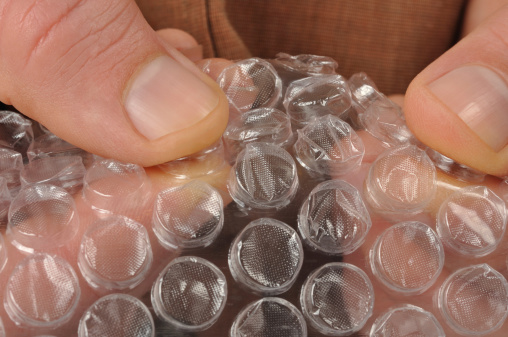 First made accidentally by Alfred Fielding and Marc Chavannes in 1957, bubble wrap has a long history of helping people around the world ship items safely, securely, and inexpensively.
Since the pair of engineers stumbled across the benefits of this cushioning agent six decades ago, much has changed in the bubble wrap world. Now, although there remains a strong demand for standard bubble wrap, there is also biodegradable bubble wrap, specialty bubble wrap that is pre-shaped into envelope, sleeve, and box shapes, and anti-static bubble wrap. Moreover, polyethylene foam sheets and wraps have joined the game to provide an ultra-thin cushioning agent.
Standard bubble wrap, the stuff our popping fingers have never been able to get enough of, is easy to use, lightweight and effective. You can purchase it in rolls and sheets. Some rolls are perforated every foot or so. The most common sized bubbles are 3/16”, 5/16”, and ½”.
Anti-static bubble wrap is likewise available in sheets and perforated rolls and of the same bubble sizes as is the standard wrap. However, this particular bubble wrap is your go-to choice when you need to ship electronics since it protects against static electricity. It is available preformed as a pouch in a wide range of sizes as a self-sealing pouch.
Specialty bubble wrap comes preformed so that you will not need to spend any time folding the wrap into useful shapes. We offer bubble wrap in self-sealing pouches and flush cut bags with both coming in a variety of dimensions. These are great for shipping oddly-shaped items.
Polyethylene foam, a relatively new comer to the shipping world, is available in perforated rolls, sheets, and a number of different pouch sizes. This cushioning agent is durable and non-abrasive and the perfect packing solution for the shipping of dishes and the protecting of the finishes of furniture.
